
Waterkloof Ridge BlindsView-glass shading, made to measure

Service area

Blinds in Groenkloof

Bordering the nature reserve, Groenkloof keeps a quieter, greener character than the ridge above it — and its windows are specified accordingly.

Groenkloof runs along the edge of one of Pretoria's oldest proclaimed nature reserves, and the suburb's character follows — established gardens, a strong diplomatic-residence presence, and stands that tend to prioritise privacy and shade under mature trees over the uninterrupted view-first glazing found higher up the ridge.

That changes the specification conversation a little: interior blinds and timber venetians do more of the everyday work here, with exterior systems reserved for the specific rooms and additions that do open toward hard afternoon sun. Bushveld visitors — monkeys included — are also a fair reason to prefer motorised or cordless operation on ground-floor windows.

Reserve-edge homes want shade and privacy first, glare control second.
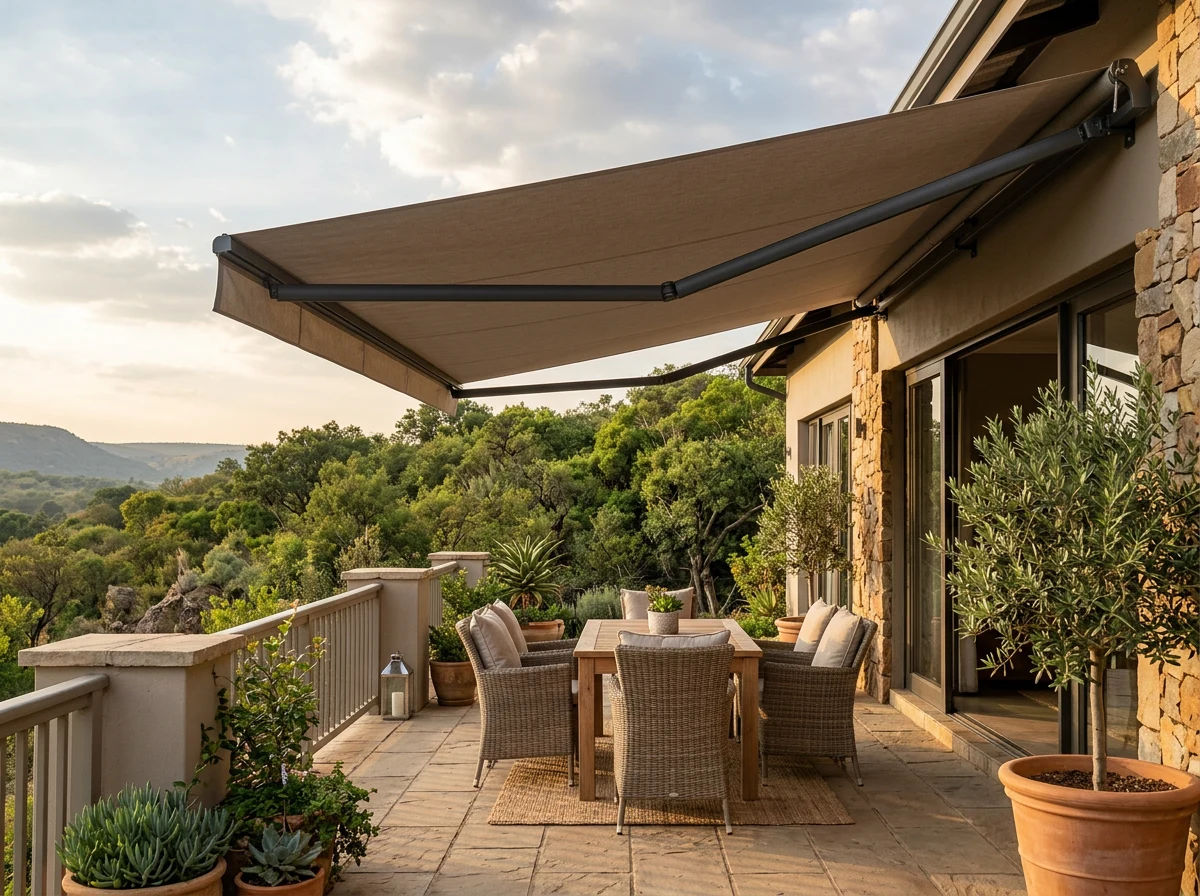
Folding-arm awning extended over a patio at a reserve-edge Groenkloof home, view of the nature reserve treeline
Specified in GroenkloofA folding-arm awning over the patio, for the hours the tree canopy does not quite cover.

Most requested here

The canopy is shade with a season on it

The mature trees along these streets do a great deal of shading work, and it is easy to specify a window on the strength of it. The catch is that the canopy is at its thickest in February, when the midday sun is already up near 88 degrees and would struggle to get in anyway, and at its thinnest in July, when the noon sun has dropped to about 41 degrees and comes in almost horizontally under whatever branches are left. A room that feels perfectly comfortable when a consultant walks it in late summer can be a glare problem by the middle of winter. We measure with that swing in mind rather than trusting the shade that happens to be there on the day.

It changes what gets recommended. Rooms that face the reserve and lose their sun early hold the cold, and a honeycomb blind, with its own layer of trapped air at the glass, is a better answer there than a flat fabric that only manages light. Living rooms that catch a raking hour through the trees want tilt or mesh rather than blockout, so the room keeps its greenery. Patios are their own case: the canopy covers part of the afternoon and not the rest of it, which is exactly the job a retractable awning was invented for — out when it is needed, gone when the winter sun is welcome back on the paving.

Anything outside gets specified around the summer weather. Storms arrive on Highveld afternoons from roughly November to February, hail peaks in December and January, and both land at the hours an awning is most likely to be open. A wind sensor that pulls the fabric in on its own is not a gadget here, it is the reason the awning survives its third season. Two honest notes to close on: awning fabric is a consumable rather than a roof, and on ground-floor windows we fit cordless or motorised controls as standard, which is safer for small children and gives an inquisitive visitor from the reserve nothing to pull on.

Trust the compass and the calendar, not the shade that happens to be there today.

Also serving

New to specifying for the ridge's light? The Waterkloof Ridge View-Glass Field Guide walks the sun path, the four elevations and the honest trade-off on each product — free to read, no sign-up.

Book a free measure in Groenkloof

A consultant measures on site, brings samples, and leaves you with a written per-window quote.

Request my call-back →

Enquiries are used only to arrange your consultation call-back (POPIA).