
Waterkloof Ridge BlindsView-glass shading, made to measure

Service area

Blinds in Waterkloof Heights

More koppie, more sky, more glass — Waterkloof Heights carries the ridge's view-home logic even further up the slope.

Waterkloof Heights climbs higher than most of its neighbours, and the building style follows the terrain — contemporary homes with large uninterrupted glazing, positioned to make the most of an outlook that stretches well past the immediate garden. That exposure is a selling point for the house and a specification challenge for the windows in more or less equal measure.

Because so many stands here are new builds or full renovations, we're often able to plan shading with the architect or the owner before the glass goes in — the cleanest way to get an exterior system right, rather than retrofitting around finished facades. Where the house is already built, retrofit remains entirely possible on most elevations.

The higher the stand, the harder the sun works to get through the glass.
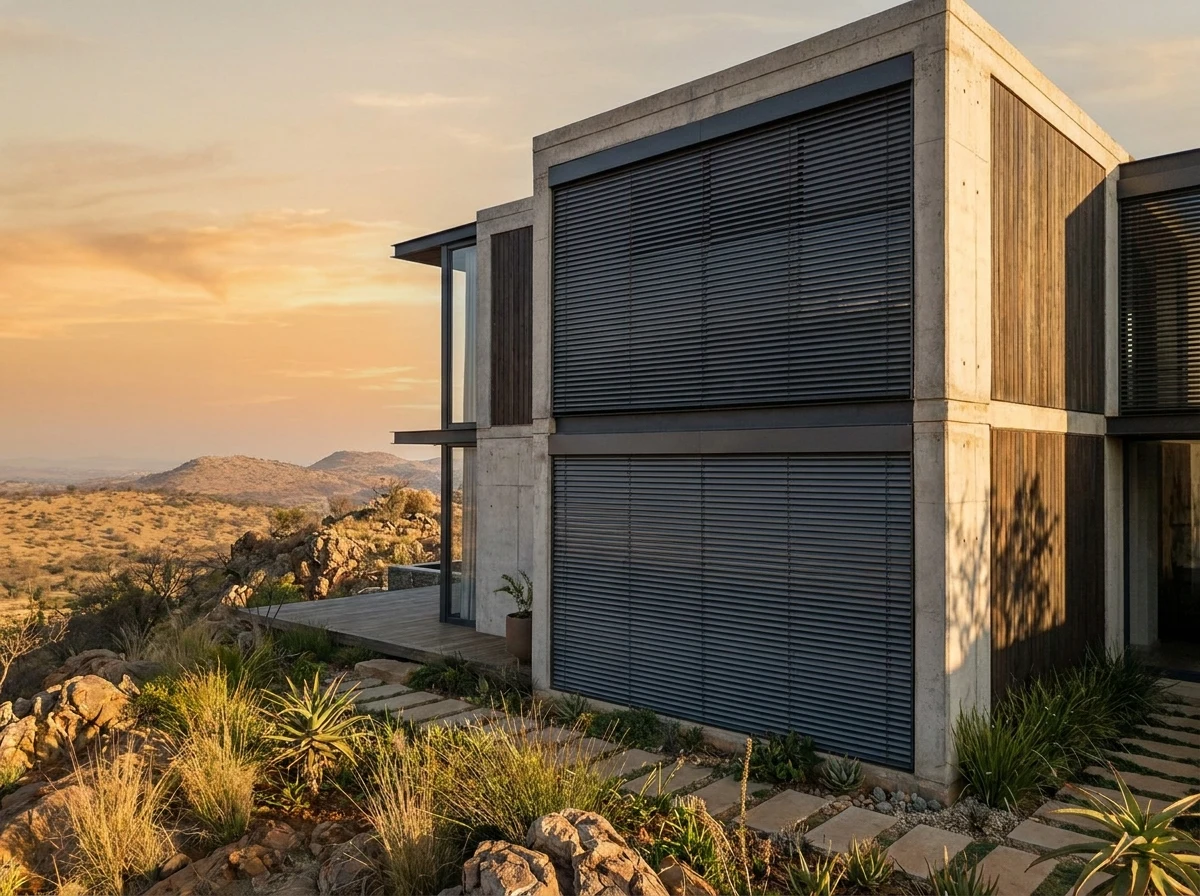
External venetian blinds on a north-west facing double-storey facade, slats fully closed against low sun with koppies in the distance
Specified in Waterkloof HeightsExternal venetian blinds on a hard north-west elevation — the heat is stopped before it reaches the glass.

Most requested here

  • External venetians — the strongest answer for the hard north- and west-facing glass walls typical of the newer builds up here.
  • Folding-arm awnings — shade for the outdoor entertaining areas that come with a view-first design brief.
  • Sunscreen & blockout rollers — the interior finish for bedrooms and living spaces on every elevation.

Why west costs more than north up here

On a stand this high the north wall is rarely the villain. In December the midday sun stands near 88 degrees, so a terrace slab or a deep eave above north glass blocks most of it without any help; in June it drops to about 41 degrees due north, low enough to reach into the room, which in a Pretoria winter is warmth arriving for free. West is the elevation that empties the wallet. The sun goes down between roughly 243 degrees at the December solstice and 296 degrees in June, and by the time it gets there it is low, horizontal and level with the eye, at precisely the hour the living room and the terrace are in use. No overhang catches light arriving from underneath.

That is the argument for stopping the beam outside the pane rather than after it. An interior blockout ends the glare in a second, but the glass itself has already absorbed the energy and goes on radiating it into the room for the rest of the evening. External slats intercept the sun before it touches the glass, so the pane never warms in the first place, and half-lowered they take the top of a tall window and leave the outlook underneath intact. Where an exterior system is not wanted, mesh in front of a blockout on one bracket is the honest second best, and less effective on heat — we would rather say that than sell it as equivalent.

Two planning points that are far cheaper to solve early. The first is reach: split levels, double-volume lounges and stairwell voids put a good share of the glass beyond any hand, so motorisation stops being an upgrade and becomes the only way the blind ever gets used. Deciding between a battery tube and a hardwired motor before the plaster goes on saves chasing a wall afterwards. The second is the weather. Afternoon thunderstorms run from about November to February and hail peaks in December and January, so anything living outside the glass is specified around a storm that arrives fast — wind sensors, tested guides, and fixings chosen for the substrate actually behind the render.

The exposure that sells the house is the same exposure the windows have to survive.

Also serving

New to specifying for the ridge's light? The Waterkloof Ridge View-Glass Field Guide walks the sun path, the four elevations and the honest trade-off on each product — free to read, no sign-up.

Book a free measure in Waterkloof Heights

A consultant measures on site, brings samples, and leaves you with a written per-window quote.

Request my call-back →

Enquiries are used only to arrange your consultation call-back (POPIA).